Analytic Martial Arts

Thursday, September 15, 2011

Notation: Weapons I

One of the things that I really like about Studio X is that weapons work is part of the core material and not an occasional adjunct. As a result I now have weapons forms to memorize, some of which are proving to be challenging. So now seems to be a good time to start thinking about developing a vocabulary for weapons forms.

There's good reason to be skeptical about the idea of a single, a unified vocabulary which encompasses the vast menagerie that is kung-fu weaponry. Even if we confine ourselves to only the most frequently used weapons there's a still tremendous amount of variation. That said I want to take a stab at it and see if we can up with something which is good enough for our purposes.

Based on my experience, when it comes to mechanics everything is ultimately a stick1:

Symmetric Asymmetric
Solid Staff, headless cane, escrima swords, spears, kwon-dao
Jointed nunchaku, 3-section staff 9-section whip

Some are one-handed, some are two-handed, some are sharp, some are not. Some slash, some stab, some bludgeon. But you can generally capture the motion of the weapon by accurately describing the position of the two ends through time. Moreover, its usually even simpler than that. Each weapon has a standard repertoire of strikes, so I suspect the vast bulk of the time you can get away with using standard symbol, the same as hands and feet. Where things start to get tricky, in my estimation, is in the notion of the return path.

Technically punches and kicks also have a return path, a motion that follows the delivery of the strike/block to prepare the limb for further actions. But it's almost always the case that there's only one correct return path for any given strike/block; the exceptions are so far and few between that they don't merit concern. With weapons, on the other hand, there may be a number of options, each of which has implications for which follow-up strikes are possible. Thus it seems to me that the first step in expanding the notation system is to find some way to represent the return path.

Recall that the complete grammar for a strike/grapple is

<identifier|(surface)><strike|grapple + direction>(<target>)

where the direction and target are usually implicit and thus omitted for the sake of brevity.

The logical extension of the above is to place a symbol after the target which indicates the type of return to execute, since the return happens after delivery of the strike. If we adopt this convention, however, it suddenly becomes necessary to specify the direction and target of every strike (even if these are otherwise implicit) for which we wish to indicate a return path. This may be required for the bulk of the strikes in a weapons form, leading to the inclusion of a lot of redundant data and unnecessarily decreasing the readability of the final form.

This argues that we should find a way to record the return path without necessarily needing to specify the direction or target. The solution which immediately springs to mind is to use the '+' symbol like so

<strike identifier>+<return path identifier>

where the return identifier is up to the discretion of whomever is using the notation.

Consider the headless cane; an overhead strike can be returned directly, using an inside loop, or an using outside loop. These could be recorded as "OHS+D", "OHS+I", and "OHS+O"; quick an easy.

I'm by no means completely sold on this, but I think it shows promise. I'm going to try to record a staff form and see if I run into any difficulties.


1 This generalization seems to apply across the bulk of MA weaponry, but there are obviously some exceptions: tonfa, wind and fire wheels, bench, tiger head shield.
2 While "inside" and "outside" are correct from a technical standpoint they're also relative directions; I'd probably use "left" and "right" in production to aid comprehension.

Sunday, September 11, 2011

Notation: More Thoughts On Grappling

One problem to which I've yet to find a satisfactory solution is the need to distinguish between the actions of the performer and those of the performer's opponents. Consider the following line from Short Form 18 which has been gnawing at my brain for awhile:

BB-(LOW)

That reads "bird break to the opponent's left, outer wrist" which, by itself, is clear enough. In the greater context of the form, however, the move only makes sense if you understand that the opponent has grabbed the performer's right wrist immediately prior. Ideally what I would like is to have some convenient way of indicating this action on the part of the opponent.

At this point we're essentially dealing with the problem of representing multidimensional data on paper. The solutions which most quickly spring to mind involve doing something to the notation text itself such as changing it's color or font to indicate who's doing what. That might work for publishing in HTML, but recall that we also want to be able to use this notation in the field with nothing more than pen and paper, which basically rules out any sort of fancy manipulation of the text.

One thing we could try is to changing its size since that's something which is easy enough to do in the field. For example, if I wanted to indicate that the bird break was immediately preceded by a grab on the opponent's part I might write

BB-(LOW)
Grab-(ROW)

Which reads as "opponent executes a left grab to the performer's right, outer wrist". I think there's merit in this idea; the change in size de-emphasizes the importance of the text, making it more of an annotation to the main action. However, I'm not convinced that this is a general solution to the problem of identifying performer and opponent, so let's see what else we can come up with.

Part of the motivation for telling one from the other is the desire to have notation which works for describing chi na (techniques involving holds/grappling) as well as strikes. We're partway there, but the notation we've been using for grappling so far lacks precision. When I write

Grab-(ROW)

what kind of grab am I trying to convey? There's only one that makes any sense in this context, but we can't always rely on that being the case. What I'd really like to be able to do is describe chi na in terms of the surfaces/targets which are brought together. Something like

(IH)-(ROW)

where "IH" is "inner hand" (or "palm", if you prefer). You see, however, that there's a bit of ambiguity here; which surface belongs to which person?

One solution which has occurred to me is somewhat baroque and may not work in the long run, but I want to get it down for posterity anyway. Suppose that we envision the performer as being in the center of a grid, surrounded by opponents, like this:

If we want to describe a particular configuration we can then write it in this grid like so:

Literally this reads "the performer's right, outer wrist is in contact with the left, inner hand of the opponent standing in front of em" from which we can infer that the opponent has grabbed the performer by the wrist. Now, things that I like about this format:

  • Ownership of limbs is fully established.
  • It's easy to convey the relative position of the performer and opponent. This is especially important for chi na since the opponent may attack from behind or the side.
  • We can do away with specifying "left" and "right" for limbs/surfaces by positioning them in the appropriate portion of the box. This has the added benefit of disambiguating "performer's left" from "opponent's left".
  • It's visually very appealing; I can tell at a glance that there's some sort of grapple involving the performer's right side and the opponent's left side.

Now, the cons:

  • It's not compact or efficient; there's a lot of empty boxes lying around.
  • It's difficult (if not impossible) to typeset in HTML.

Let's work on the compactness issue first. Suppose we eliminate all of the boxes that have nothing going on:

Better... we've increased the data ink ratio. But in removing the unused boxes we've lost our grid and, with it, the implicit identification of the performer as the person in the center. Can we de-emphasize the opponent's actions/position in some fashion like we did above by shrinking the font size? I think so:

It seems self-evident to me that the performer is the one in the solid box and the opponent is the one in the dotted box. Now, how about typesetting? Most of the elements can easily be done with HTML tables; the only thing that's at all complicated is the "grapple" line since it crosses two cells. We can work around that by creating DIVs containing the Unicode box-drawing character "│" (&#9474;):

    (IH)
│
   
│
(OW)

That takes care of the two big objections I lodged earlier, but it still remains to be seen whether this innovation can be coherently integrated into a complete form. Here's what Short Form 18 looks like when the note about the grab is added:

SKRight
CFS
←DPBRSH
BB-(LOW)
(IH)
│
   
│
(OW)
IBBS HP
↑
NS

My immediate objection is how prominent the grab is; it draws the eye and takes up the equivalent of four rows. It becomes the focus when it's really supposed to be more of an annotation to help the student understand the following action. More radical action is required:

    (IH)│
    (OW)

That screaming you hear is me abusing CSS relative-positioning to position the grappling line, but the result looks a lot better. Short Form 18, with the revised typesetting:

SKRight
CFS
←DPBRSH
BB-(LOW)
    (IH)│
    (OW)
IBBS HP
↑
NS

Better, but still not quite what I'm looking for. I think this box-style notation will be good for chi na since grappling is the main focus of those techniques. But, even with reduced space consumption, the boxes are still too obtrusive to be used for the type of annotation which Short Form 18 seems to require. So let's return to the idea which we set aside earlier, using a smaller font under the main entry to denote what the opponent is doing.

Recall that the main problem is that, with the existing grappling notation, there's no way to tell which surfaces belong to which person. We could just adopt a convention based on position and say that the left side of the "(<target>)-(<target>)" formulation always belongs to the performer while the right side belongs to the attacker. But that's a sub-optimal solution since left and right are used to denote sides of the body everywhere else. Another thought which occurs to me is that we can use one type of bracket for the performer and another type of bracket for the opponent. We could, for example, use "< >-( )" where "< >" is the performer's action and "( )" is the opponent's. This would almost be workable except for the fact that "<" and ">" are already reserved for attention changes. Square brackets are reserved for preparation and delivery, which leaves use with curly brackets ("{ }") as the only common set of bracketing symbols which are still available. "{ROW}-(LIH)" is OK, but not great, since curly braces aren't particularly evocative of anything.

Maybe we need to go back and revisit the notion for grappling/targeting entirely? I like the notation we've developed for targeting; "<symbol>→(<target>)" just makes sense. Here's a thought... can we change the symbol we use to indicate "grapple" so that it's not symmetric? I was looking through the list of Unicode arrows and noticed that it contains some double arrow glyphs:

⇇ ⇈ ⇉ ⇊

If a single arrow means "strike" can we then take a double arrow to mean "grapple"? I like this solution a lot; it seems like a natural extension of the existing (and perfectly satisfactory) targeting notation. We can then also adopt the following conventions across the board:

  • "( )" means "target/surface".
  • "→" means "strike". The head of the arrow points to the person being struck (usually the opponent).
  • "⇉" means "grapple". The head of the arrow points to the person being grappled.

Let's return once more time to Short Form 18. Rewriting using the above conventions it becomes:

SKRight
CFS
←DPBRSH
(LOW)
⇈
BB
IBBS HP
↑
NS

Note also that I rewrote the bird breaks to use the proper arrows/orientation; the way I'd written it before technically mean to do the break to the side.

That, I think, looks pretty good, but we still haven't solved the original problem of how to indicate what the opponent is doing. How about if I just put the opponent's action in a smaller font alongside?

SKRight
CFS
←DPBRSH
(LOW)
⇈
BB
 (LIH)
⇊
(ROW)
IBBS HP
↑
NS

So now, next to the performer's action, there's a smaller block of text which reads "left inner hand grapples right outer wrist". This should be interpreted as the action to which the performer is responding/reacting. I went back and forth on the direction of the grappling arrows and finally decided that it was easier to understand if we just maintain the convention the performer's front is always the top of the page.

Comments on all of the above?

Tuesday, August 30, 2011

Notation: State Of The Onion

After transcribing the latest batch of short forms I'm pretty happy with the way that the notation system is coming along. It's complete enough that I can concisely record complicated actions, which indicates to me that now's a good time to step back and evaluate the system as a whole. For example, consider Studio X Short Form 21:


UB CSRPLeft
↓
Feint3
BS
↺
(G)←BF
XB2
←InB/TH>HS
⊙ ↓ ↻OB1
RPCS UBRight
↓
Feint3
BS
↻
BF→(G)
XB2
HS<InB/TH→
OB⊙ ↓ ↺1
NS

(1) Blocking arm comes to rest in upward block position, wrist facing inwards, in preparation for cross-block.
(2) The cross-block is formed by continuing the motion of the inward block/twist-hit so that the arm comes to rest in upward block position, wrist facing inwards, on the outside of the arm which executed the outward block.
(3) The defender leans forward slightly, offering their chin as a target, in an attempt to bait the attacker.


What's the overall effect here? Is the transcription legible? Do all the various symbols work well together?

I believe the system as it stands right now works well visually. The division of the symbols into rows and columns imposes an order which makes them easy (or easier, at least) to parse at a glance. I also think we've also done a good job so far of preventing symbol proliferation; we don't have a lot of arbitrary symbols which have to be memorized.

It does take a little bit of practice to get used to reading/writing forms using this system. One thing that I've noticed is that I tend to get "lost" when reading; I can't always tell what part of the form I'm looking at based on a few lines of context. As an aid to navigation I find that it help to break long sequences up into short sections; in Short Form 21 above I divided the left and right sides by means of a heavy line and then noted which was which off to the side.

There's also the problem of dealing with "unique" movements which are idiosyncratic to a particular form. These movements don't occur with enough regularity that it makes sense to develop specific notation for them, but its still necessary to record them in some fashion for the sake of fidelity. Most of the time its possible to record an approximation of the movement using existing notation, at which point I can just add a footnote elaborating on the movement in English. When there's nothing close I just write down a word (like "feint") and explain it; that seems sufficient given that the primary purpose of the system is to server as a mnemonic device.

Now, shortcomings: I'm not wholly satisfied with the grappling notation that we've developed so far; I think we're on the right track, but I'm not sure its expressive enough to be accurate or useful in the long run. Additionally there is, as of yet, no good way to record what the performer's opponent is doing. These two items are related; finding a good way to record the opponents actions will no doubt help with grappling notation as well. I'm going to turn my attention to that problem next.

Thursday, August 25, 2011

Notation: Jumping

By executive fiat I've decided to borrow the "circle with dot" sign (⊙) to indicate "jump". This sign is commonly used in physics textbooks to indicate a vector "out of the page", so it seems apropos.

Studio X: Short Forms: Rank 3

Some things to remember regarding these techniques:

  • Each complete form consists of identical left- and right-sides joined together by an appropriate, step-through transition.
  • The right side is always performed first.
  • In general the first attack is on the same side as the leading foot. This is in opposition to the early forms (especially 1 - 10) in which the attack occurs opposite the leading foot.

Key

  • BB: Bird Break
  • BF: Back Fist
  • BS: Bow Stance
  • CFS: Circular Front Sweep
  • DDB: Double Downward Block
  • DFB: Downward Forearm Block
  • DPB: Downward Palm Block
  • G: Groin
  • HP: Horizontal Punch
  • HS: Horse Stance
  • IB: Intercepting Block
  • InB: Inward Block
  • NS: Natural/Neutral Stance
  • OB: Outward Block
  • RSH: Rising Side Hand
  • SK: Snap Kick
  • TH: Twist Hit
  • UB: Upward Block
  • W: Wrist
  • XB: Cross-Block

16

DDBLeft
HPIB
BSHP
OB↺
←HP> HS
↑ ↻IB
DDBRight
IBHP
HPBS
↻OB
HS < HP→
IB↑ ↺
NS

17

HP BSIBLeft
↑
OBNSHP
↑
HP BSIB
↑
IBBS HPRight
↑
HPNSOB
↑
IBBS HP
↑
NS

18

BSLeft
SK
CFS
RSHDPB→
BB-(ROW)
HP BSIB
↑
SKRight
CFS
←DPBRSH
BB-(LOW)
IBBS HP
↑
NS

19

BSLeft
THSK
BS
SKRP
UB CS
↺
←BF> NS
←←DFB
←HP> HS
↑ ↻IB
SKTHRight
BS
RPSK
CS UB
↻
NS <BF→
DFB→→
HS <HP→
IB↑ ↺
NS

20

BSLeft
↑
THSK
IBHP
BF
HP BSIB
↑
SKTHRight
HPIB
BF
IBBS HP
↑
NS

21

UB CSRPLeft
↓
Feint3
BS
↺
(G)←BF
XB2
←InB/TH>HS
⊙ ↓ ↻OB1
RPCS UBRight
↓
Feint3
BS
↻
BF→(G)
XB2
HS<InB/TH→
OB⊙ ↓ ↺1
NS

(1) Blocking arm comes to rest in upward block position, wrist facing inwards, in preparation for cross-block.
(2) The cross-block is formed by continuing the motion of the inward block/twist-hit so that the arm comes to rest in upward block position, wrist facing inwards, on the outside of the arm which executed the outward block.
(3) The defender leans forward slightly, offering their chin as a target, in an attempt to bait the attacker.

22

UB BSRPLeft
↑
CS
InB↺ →
(G)←BF>
XB2
InB/THHS
⊙ ↑ ↻OB1
RPBS UBRight
↑
CS
← ↻InB
<BF→(G)
XB2
HSInB/TH
OB⊙ ↑ ↺1
NS

(1) Blocking arm comes to rest in upward block position, wrist facing inwards, in preparation for cross-block.
(2) The cross-block is formed by continuing the motion of the inward block/twist-hit so that the arm comes to rest in upward block position, wrist facing inwards, on the outside of the arm which executed the outward block.

Monday, August 22, 2011

A Shout Out To Woodall's Custom Workshop

A form which I'm learning requires the use of a headless cane, basically just a big rod that extends from the ground to a little past my wrist when I'm standing in natural stance. For me that's about 32" which, as I determined after visiting Seattle Martial Arts Supplies, is longer than a standard escrima stick but shorter than commonly available staffs. Thus I needed to get something custom cut.

I could have just gone to Home Depot and have something cut to length, but I didn't have a whole lot of confidence that the end result would hold up well. After much poking around on the tubes I found Woodall's Custom Workshop, which seems to have found a nice little niche making hardwood weapons for martial artists. So I sent them an email asking if they could fabricate my headless cane and, after a little back and forth on dimensions and materials, they produced a quote.

Anyhow, the cane arrived a couple days ago as promised. The craftsmanship is good and I'm generally pleased with my overall interaction and would recommend them to anyone else who needs a custom, stick-like weapon. Two caveats:

  • They're really backlogged at the moment; it took more than a month from the time that I ordered to the time the stick arrived. That doesn't reflect poorly on them; they told me as much before I placed the order.
  • My cane was a little on the pricey side for what is essentially a finished dowel. Some of that is because I had it made of bloodwood, but the rest is just basic supply and demand; custom weapons are expensive.

Tuesday, August 9, 2011

Notation: Targeting And Grappling

I've run into a bit of a technical roadblock while transcribing the rank 2 sparing techniques. I need to convey the following: "Execute a left monkey grab, grabbing and holding the attacker's right wrist". To do this I need notation for at least two separate concepts, grappling and targeting, which need to be deployed in tandem to solve this particular problem.

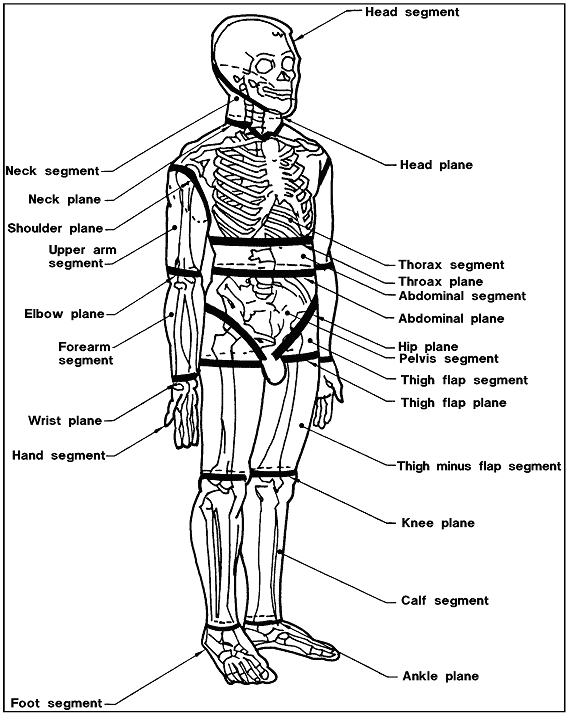
Let's return to the concept of targeting. Awhile ago I speculated that NASA's scheme for division of the body into regions could, with a little modification, serve as the basis for targeting notation. Accepting that as given for the moment lets think about how we might integrate such specifications into the system under development.

Recall that the generic notation for a strike is simply "<symbol>", and that this symbol can be decorated with a directional arrow to indicate the angle of attack. In the techniques I've transcribed so far the arrow is usually omitted, implying that the default angle (i.e. forward) should be used. It seems to me that there is also an implicit target; if someone tells me to "reverse punch" I know the general area for which I should be aiming.

What we need is a mechanism to specify the target in case its non-standard or not implicit in the strike.It seems logical to me to terminate the directional arrow with another symbol denoting the target. So, for example, if I wanted to specify a horizontal sidehand to the jaw I might write that as

<jaw symbol>
↑
HSH

Does this make sense, and will it work well in the overall scheme? There's an intuitive appeal to this layout; it says "execute this strike, in this direction, terminating as this target". One minor concern is that it might be hard to read; there's the potential that it might parse as "execute this strike in this direction, and execute this other strike as well". The target symbols will need to be chosen such that they aren't easily mistaken for strikes.

On the whole I think this will work, which brings us to the concept of grappling in general. When I think of grappling I think of bringing surfaces into contact for some period of time. If we go with a targeting system based on NASA's body regions we'll have a suitable vocabulary of surfaces, which means we just need to figure out how to indicate a "grab".

How about this?

<grapple symbol>-<target>

I've stolen the '-' from chemistry notation to indicate a bond. does that make sense? We don't use it anywhere else, it's not another arrow, and it visually joins the defender and attacker together.

What about duration? Grapples, by definition, persist over time; we need some way to specify how long the grapple is held. I like a simple line heading up the page:

	|
	|
<grapple symbol>-<target>

Adopting this notation we can easily what's going on with the rest of the body while the grapple is held. It also helps remind the performer that the grappling hand is occupied. So, referring back to our motivating example, suppose I want to record the sequence "left monkey grab to the right wrist, right forward sweep, right reverse punch, let go". I'd write down the following:

       |		RP
       |		FS
MG-<right wrist>

Alright, so far so good. Time to turn our attention to targeting symbols. The abstract criteria for targeting symbols are as follows:

  • Compact
  • Simple to remember
  • Easily distinguished from strikes

So, how to proceed from here? The NASA model divides the body into regions and planes/joints; as we discussed previously each region/joint has one or more surfaces:

  • Bottom
  • Front
  • Inner
  • Outer
  • Rear
  • Top

Abstractly, a target is just a combination of region/joint and surface, with the additional simplification that many regions of the body has "left" and "right" flavors. In keeping with the use of letters for strike symbols I recommend that we do the same for targets, in which case I submit the following grammar for evaluation:

[L|R]<B|F|I|O|R|T><region designator>

Like the strike symbols I'm going to leave the region designators undefined; different systems may want to use their own region designations.

We still need some way to separate strike and target symbols. I suggest that we use parentheses for this reason since they've evocative of a circle which is, in turn, evocative of a target. Returning once again to our motivating example, and designating "W" as the designator for the wrist, we get

       |	RP
       |	FS
MG-(RFW)

Whaddaya think?